
Checking a coin’s value is not rocket science, but it is not a light walk either. A price that seems obvious at first glance often turns out to be misleading once metal, condition, rarity, and market demand enter the picture. Many collectors start by comparing numbers from a coin values app, then look at melt value, and then browse recent auction results. Each method gives part of the answer, yet none works alone. The most reliable number comes from combining all three.
Coins behave differently depending on their surface, grade, strike quality, and survival in higher states. Even common dates shift in price once real examples are compared. The purpose of this article is to show how these three pricing sources interact and how to merge them into one consistent method that works across metals, eras, and series.
What Each Pricing Source Represents and Why the Market Needs All Three
Each pricing method describes only one side of the market. When used alone, it gives a partial number. When combined, it forms a realistic figure.
Each source answers a different question:
- Melt value: What is the coin worth as metal?
- Сoin identification app value: What does the type usually sell for under normal conditions?
- Auction data: What do buyers pay for this exact specimen right now?
Coins made from precious metal cannot fall below melt unless damaged or counterfeit. Coins supported by collector demand rise far above the metal price because rarity drives competition. Within this range, the final number depends on condition, tone, strike strength, surface quality, and eye appeal.
Combining sources avoids errors. Every coin benefits from the same sequence of checks: confirm the type, read the metal baseline, inspect the physical traits, and compare real sales. This structure removes doubts and keeps pricing stable across different series.
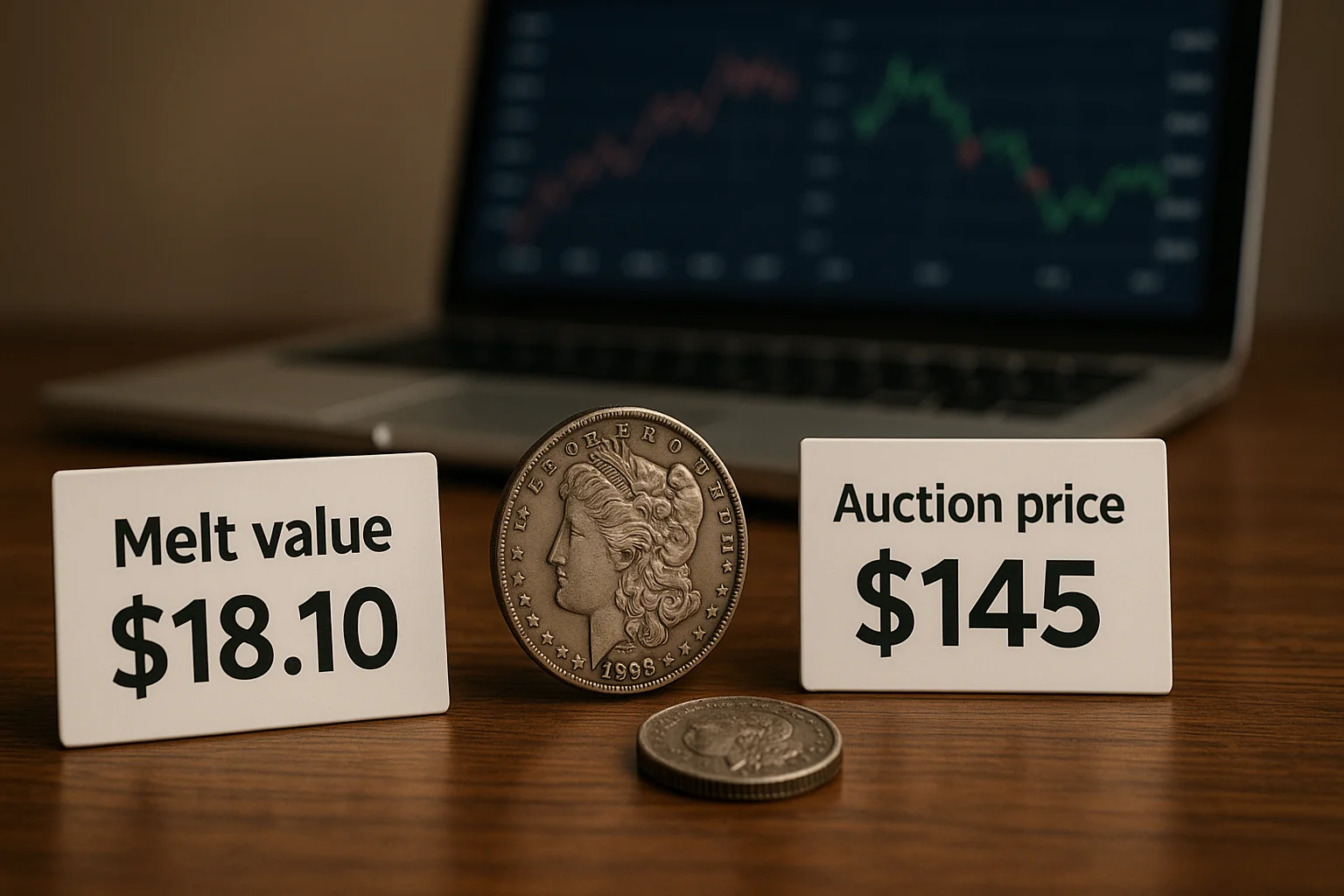
Method: How to Combine App Data, Melt Value, and Auction Prices
Here you can see how to read the coin, how to interpret each pricing source, and how these numbers interact. The system works with world coins, mid-century issues, early coppers, and modern bullion.
App-Based Value: What Digital Estimates Actually Reflect
Digital tools create the first layer of orientation. A coin identification app recognises the design, confirms the correct type, and displays official specifications. It reads the outline, inscriptions, portrait features, and reverse elements so the collector does not confuse similar world issues or varieties within the same series.
Apps operate with their own logic. If the real coin differs from this “average specimen”, the true price shifts accordingly.
Apps support early sorting and reduce classification errors. They help with large batches, mixed world lots, or unfamiliar designs. They also show expected metal, diameter, and edge type, which helps confirm authenticity before closer inspection.
But this stage gives direction, not final pricing. It shows where the type usually sits in the market, but it cannot place the specific specimen within the full price range. Physical evaluation and auction results always decide the final number.
Melt Value: When Metal Dictates the Floor Price
Melt value defines the minimum worth of any coin that contains silver, gold, or a valuable alloy. It is calculated from metal purity, weight, and current spot prices. This baseline prevents undervaluation and helps judge low-grade bullion coins that no longer carry collector premiums.
However, the metal value only becomes relevant when the content is significant. A silver coin with 90% purity reacts strongly to metal market changes. A bronze or nickel coin rarely does. Melt value also becomes unreliable if the coin is bent, holed, clipped, or heavily worn because actual metal mass may no longer match official specifications.
Melt should always be checked early, not late. If the melt is higher than the typical collector value, the coin’s market position shifts toward bullion. If the melt is far lower, the coin behaves as a collectable and other factors dominate.
Melt value does not explain rarity, design demand, tone, strike strength, or grade scarcity. It simply prevents selling metal-bearing coins for less than their intrinsic content.
Auction Data: What Real Buyers Actually Pay
Auction results show the most reliable indicator of market behaviour because they reflect real transactions, not theoretical or outdated numbers. Completed sales reveal how collectors respond to surface quality, strike sharpness, colour, and preservation. These traits cannot be captured by melt value or app data.
When reading auction prices, the collector should focus on:
- Final hammer price (not asking price)
- Examples of the same date and mint
- Similar grade ranges
- Similar tone and overall appeal
Auction results also expose spreads within a grade. Two MS63 coins may differ widely because one has better fields, a stronger strike, or more balanced tone. This variation is part of normal market behaviour.
Auction data captures demand intensity. When a date appears frequently in worn condition, but rarely in high-grade, mid-grade and high-grade examples rise sharply. Melt value cannot show this. App estimates flatten these effects. Auctions display them clearly.
Auction data should be viewed as the final anchor because it reflects the market’s actual willingness to pay.
Why These Three Sources Must Be Read Together
Each source corrects the limitations of the other two. Melt value shows metal. Apps show typical behaviour. Auctions show real behaviour. When merged, they create a complete picture.
- Using only melt undervalues rare dates.
- Using only app estimates ignores condition differences.
- Using only auction data risks misattributing the type or missing authenticity issues.
The collector should move through these layers in order: identify the type, find the melt floor, examine auction results, and adjust based on grade and appearance. Together, these steps create a valuation that remains consistent across coin types.
A Unified Workflow: How to Merge the Three Into One Number
The most practical method uses a simple chain:
- Confirm the type through an app.
- Establish the melt floor if the coin contains silver or gold.
- Study comparable auction results.
- Adjust based on surface quality, tone, strike, and scarcity in higher grades.
These steps transform three separate data sources into one value. This sequence reduces errors, protects against overpayment, and helps detect coins that behave differently from typical examples.
Apps give the starting range, melt gives the minimum, and auctions give the real curve. The collector’s inspection places the coin correctly within this structure.
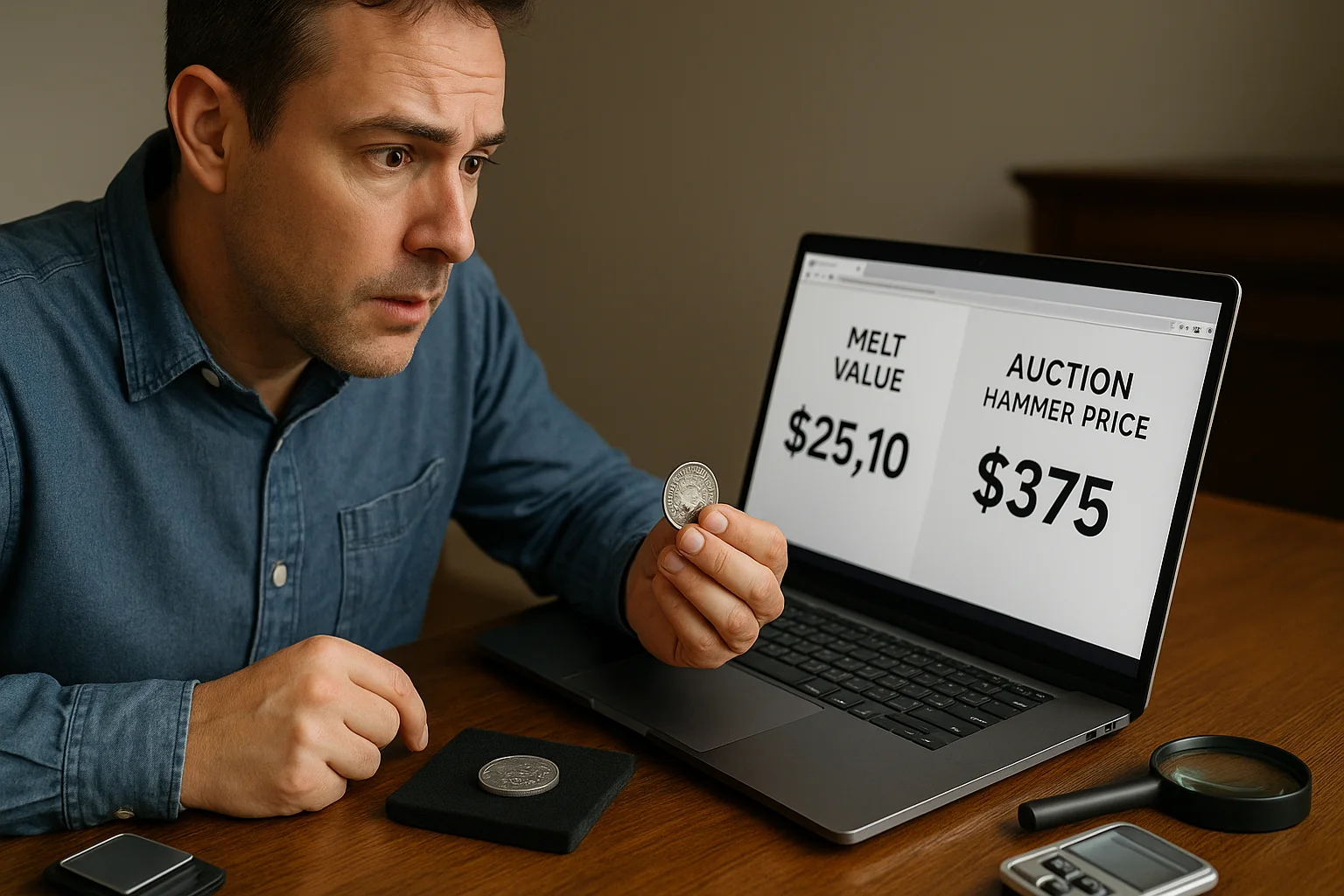
When App Value, Melt Value, and Auction Data Strongly Diverge
Some coins show extreme differences between these three methods. Below are situations where the gap becomes most visible, with concrete examples.
Case 1: High Melt Value but Low Collector Interest
This happens when a coin contains enough silver or gold to create a strong intrinsic floor but lacks collector demand. A clear example is a heavily worn 1922 Peace Dollar. The coin carries substantial silver weight, so the melt value remains high. Yet if the piece is flat, scratched, or cleaned, collectors lose interest. In this case, melt dominates. Auction sales sit only slightly above metal because the design no longer attracts attention.
The same pattern appears with common-date Mexican silver pesos from the mid-20th century. Their metal content gives them a solid floor, yet their collector premium remains modest unless the grade is exceptional.
Case 2: Low Melt Value but High Collector Value
Some coins contain almost no valuable metal but still achieve strong market prices because rarity controls the premium. A classic example is the 1909-S VDB Lincoln Cent. Its bronze composition contributes nothing to melt value, yet collector demand makes even low-grade examples expensive.
Another strong case is the 1916-D Mercury Dime. Despite containing only a small amount of silver, the price rises far beyond melt because the Denver mintage was limited and high-grade survivors are scarce. Even AG examples sell above metal content by a large margin.
These situations show how collector demand can overpower melt value entirely.
Case 3: App Shows Mid-Level Estimates, But Auctions Show Large Spreads
This pattern appears when the type has wide variation in tone, strike, or surface quality. The app gives one general range, but real specimens sell across a much wider curve.
A clear example is the 1944-D Lincoln Cent in AU–MS range. The app might show moderate pricing, yet auction results fluctuate because some pieces show strong original luster, while others show muted colour or light friction. Surface behaviour, not the date itself, produces the spread.
Grade also plays a major role. Two coins graded MS64 may differ in strike depth or field clarity. A well-struck example sells quickly. A soft-struck coin sits longer and brings a lower result, even though both share the same label.
These differences appear clearly in auction results but remain invisible to app estimates and melt value.
Final Integration: How to Combine the Three Sources Into One Accurate Value
Once the melt value, app value, and auction data are known, the collector links them into a single number:
- Melt prevents undervaluation.
- App estimates show the typical range.
- Auctions show the real curve and surface sensitivity.
Coin ID Scanner contributes at the start by confirming the correct type, showing official specs, and removing confusion between similar issues. This ensures that later valuation efforts follow the right path.
The last step is to verify authenticity, judge condition, and position the coin within the auction range. This process works for almost any series and protects the collector from relying on one source too heavily.
Conclusion: A Practical Way to Reach a Stable Number
No single method gives a complete answer. Melt value measures metal. Apps measure typical behaviour. Auctions measure real behaviour. When combined, they create a clear picture that reflects both the type and the specific specimen.
A coin value checker app supports the first stage by classifying the coin, outlining the expected corridor, and confirming the metal and dimensions. Manual inspection and completed sales finish the job by revealing grade, tone, strike, and overall appeal. This system removes uncertainty and produces numbers that match how the market actually behaves.
With this structure, any collector can price coins confidently, whether dealing with bullion, classic silver, early copper, or modern world issues.